


I've been cruising Aruna for the last two years, and for most of that time her electrical system has been a compromise. Not dangerous, not broken, just not what it should be for a boat I plan to spend years on. This is the story of how I got here, and where I'm going.
The Old System's Problems
Version 1.0 becomes version 1.5
Version 1.5 of Aruna's electrical system happened very soon after I bought her. She came with an amalgamation of crap that we'll call version 1.0 that was only partially functional, and quite dangerous. There were three different inverters - two for normal house functions, and one for the broken watermaker.
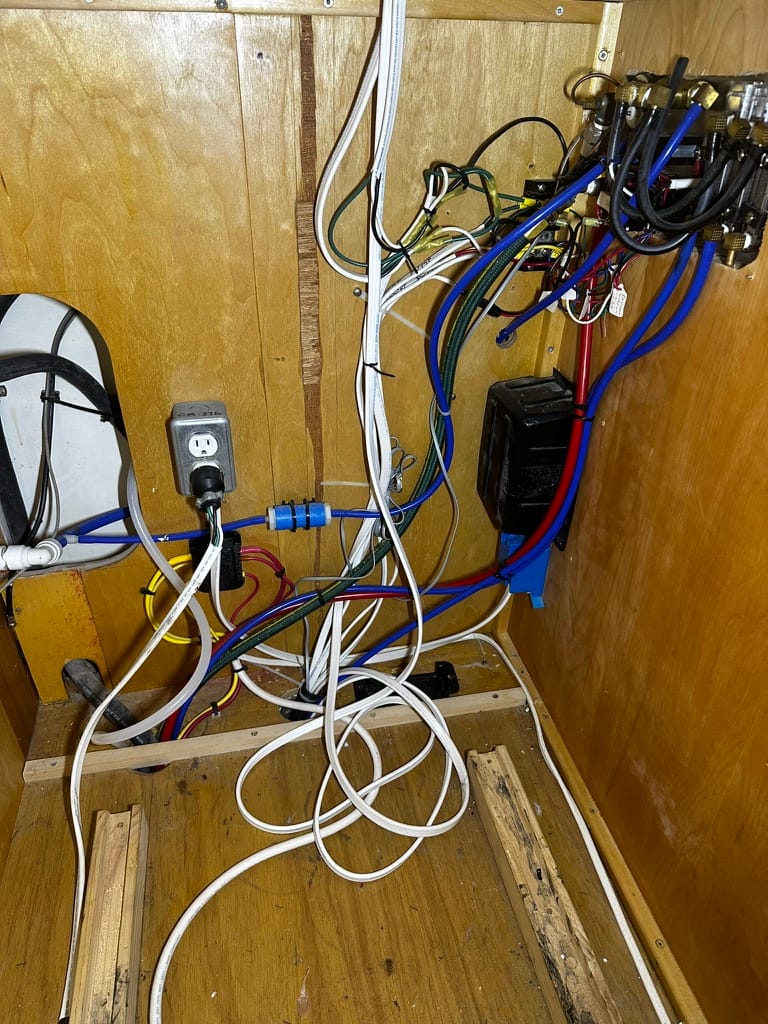
The watermaker inverter was some of the worst electrical work I've seen in years, and that's saying a lot. Directly wired into part of the house bank (not all) without any fusing or shutoff, a really crappy 3000W inverter was connected directly to the generator AC out as well without any breakers or switches. There was also a scary box hidden in a closet near the control panel that you had to use to select whether you were on generator or battery power, and no lockout. If you switched it at the wrong time, you'd create a short circuit.
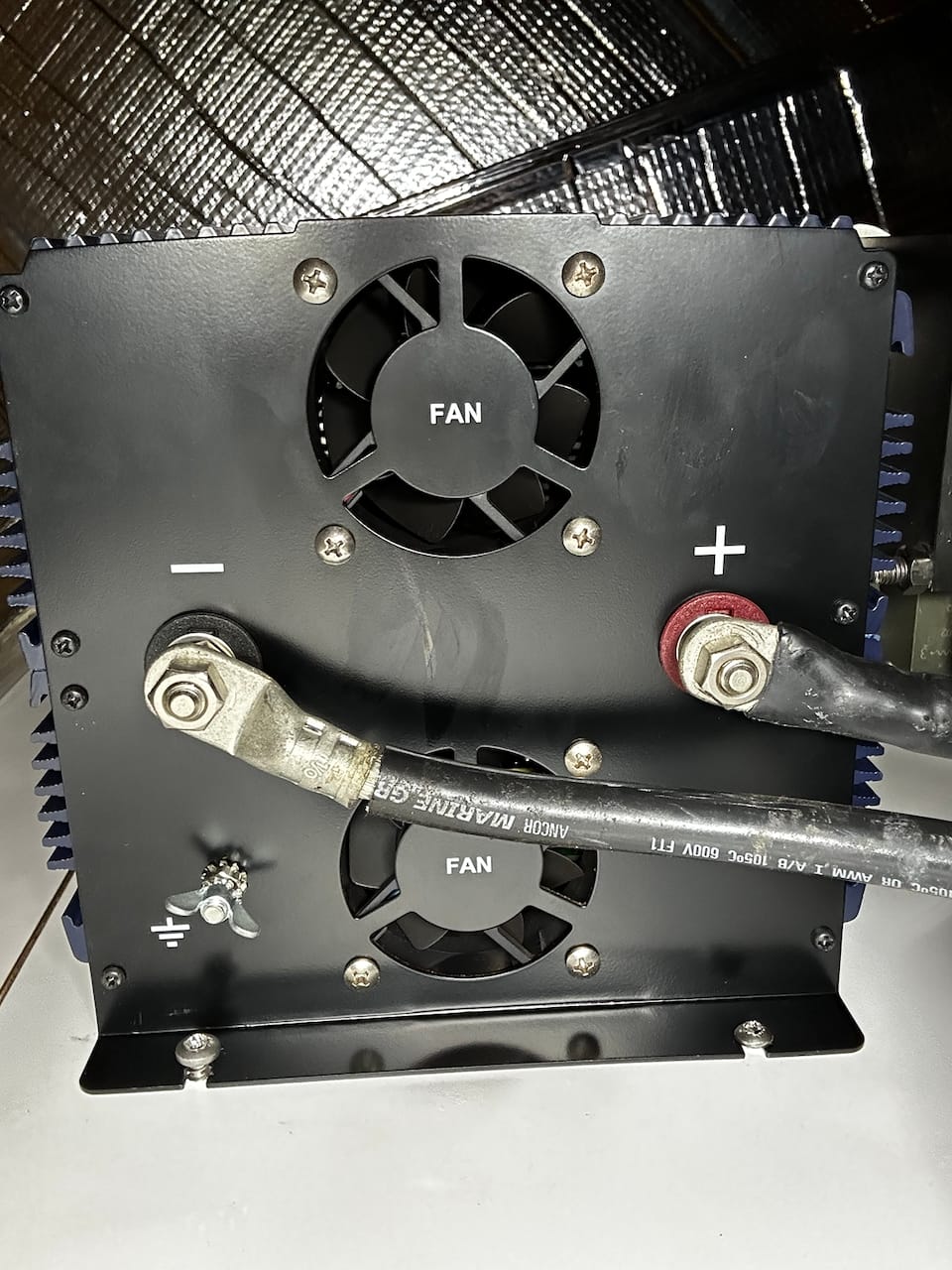
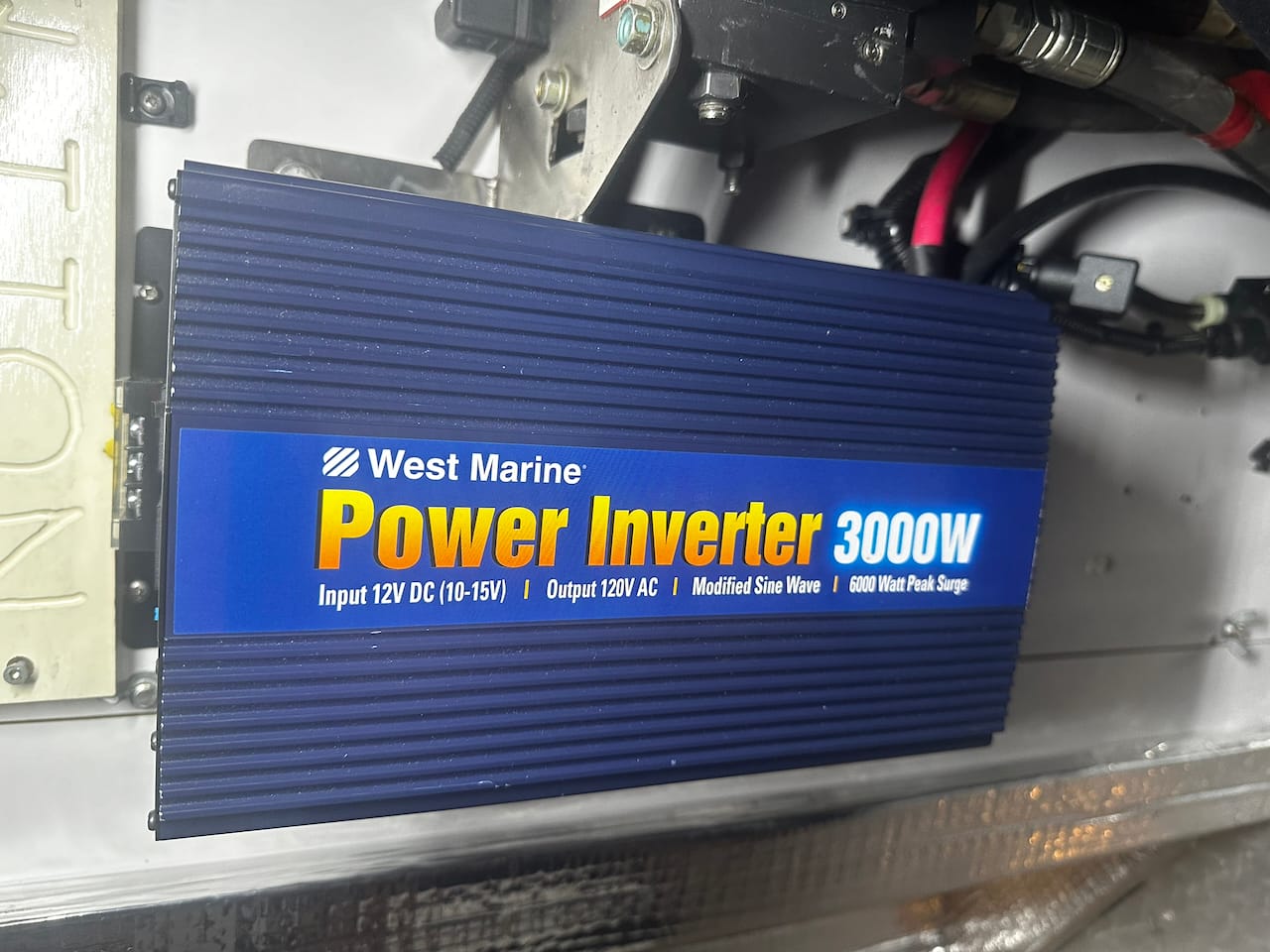
Water maker inverter - missing ground, shrink wrap and fuses (not pictured)
The idea for this inverter setup was to be able to run the watermaker while at anchor without the generator on, for some small portion of time. A 1/2 horsepower AC motor takes quite a bit of power, especially on startup, so I'm not sure this was a realistic goal. None of this worked right, and all of it was far from installed safely. I ripped it out in the first week of owning Aruna.
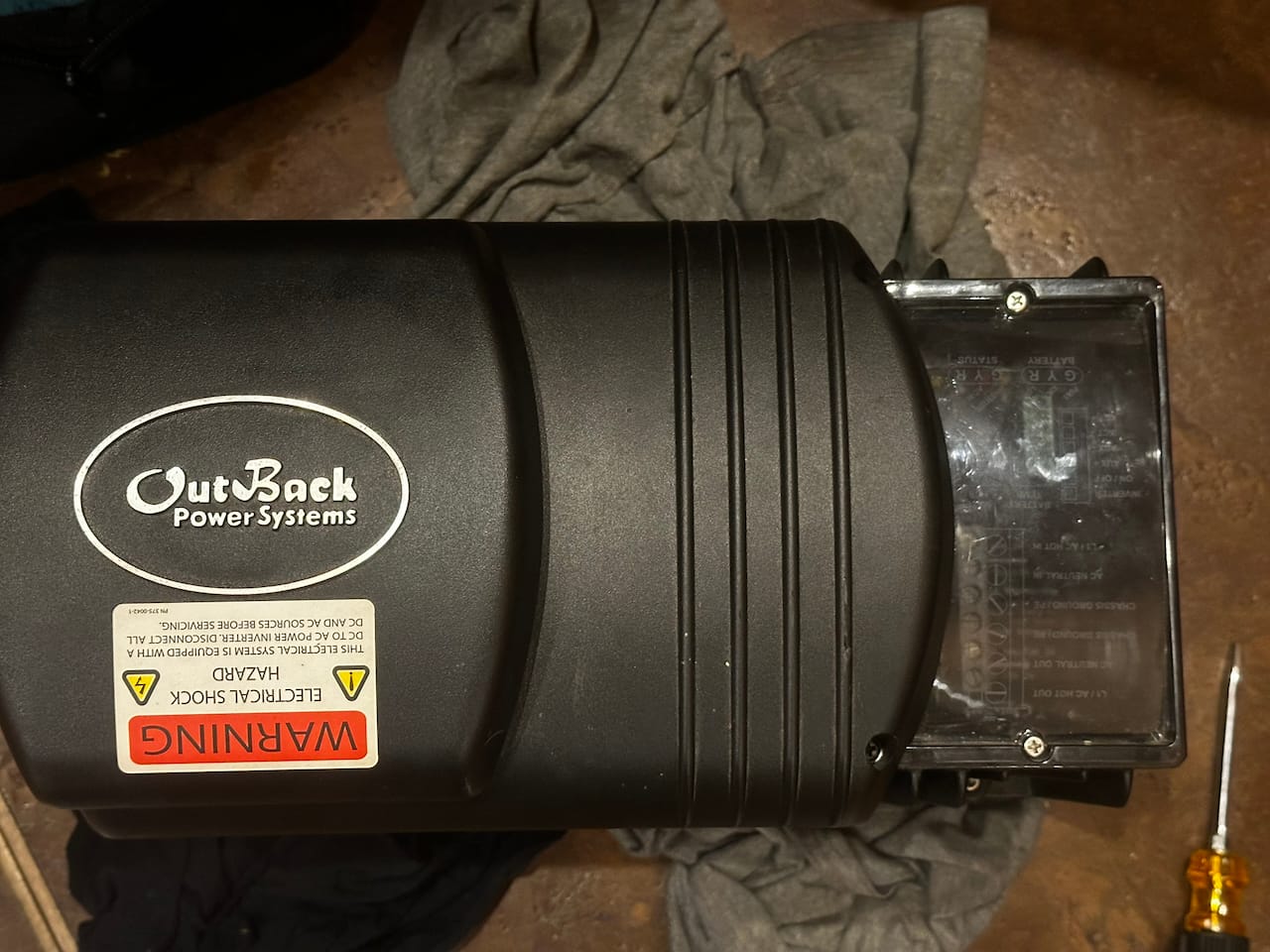
Original inverters on Aruna - Outback and Xantrex
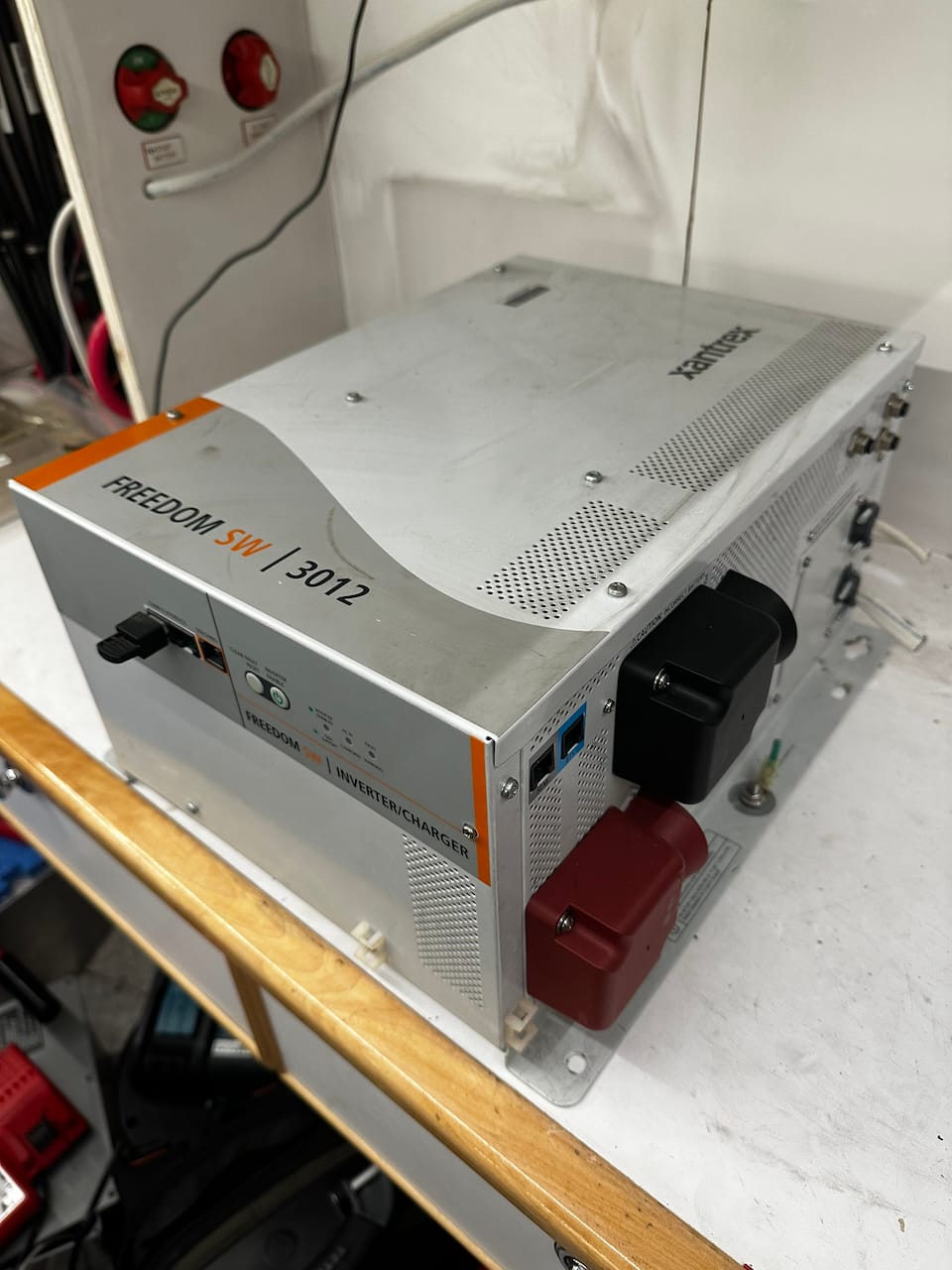
The two inverters for house loads were a Xantrex 3000W inverter, and an Outback 2000W inverter. The Outback had been installed originally when the boat was built, and was not in great condition. The Xantrex was added later on, and someone added a switch box to choose between the two that was a nightmare of poorly connected AC wiring, loose crimps, and more. The Xantrex also shut down randomly, threw many different errors, and had a bad fan noise.
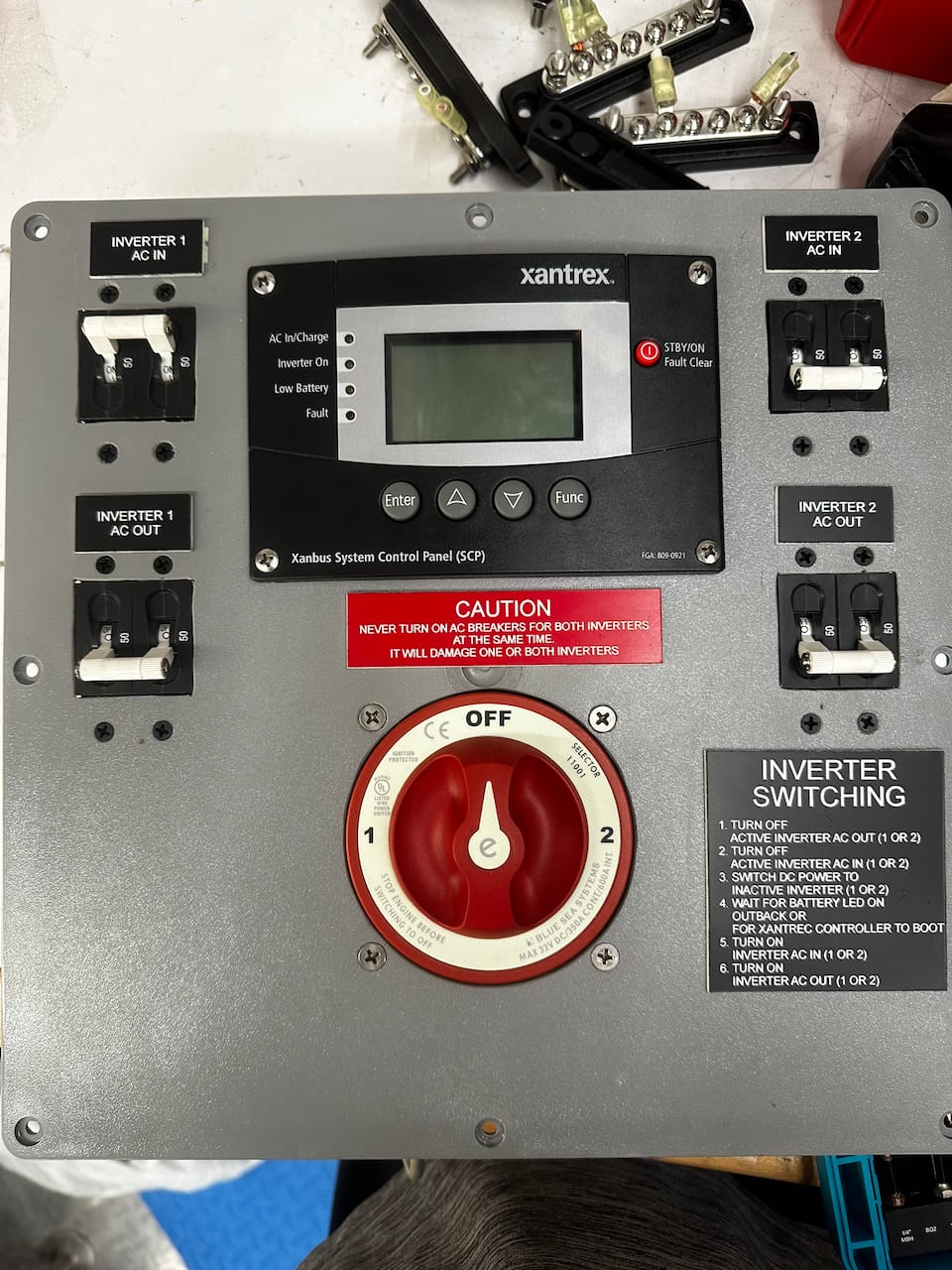
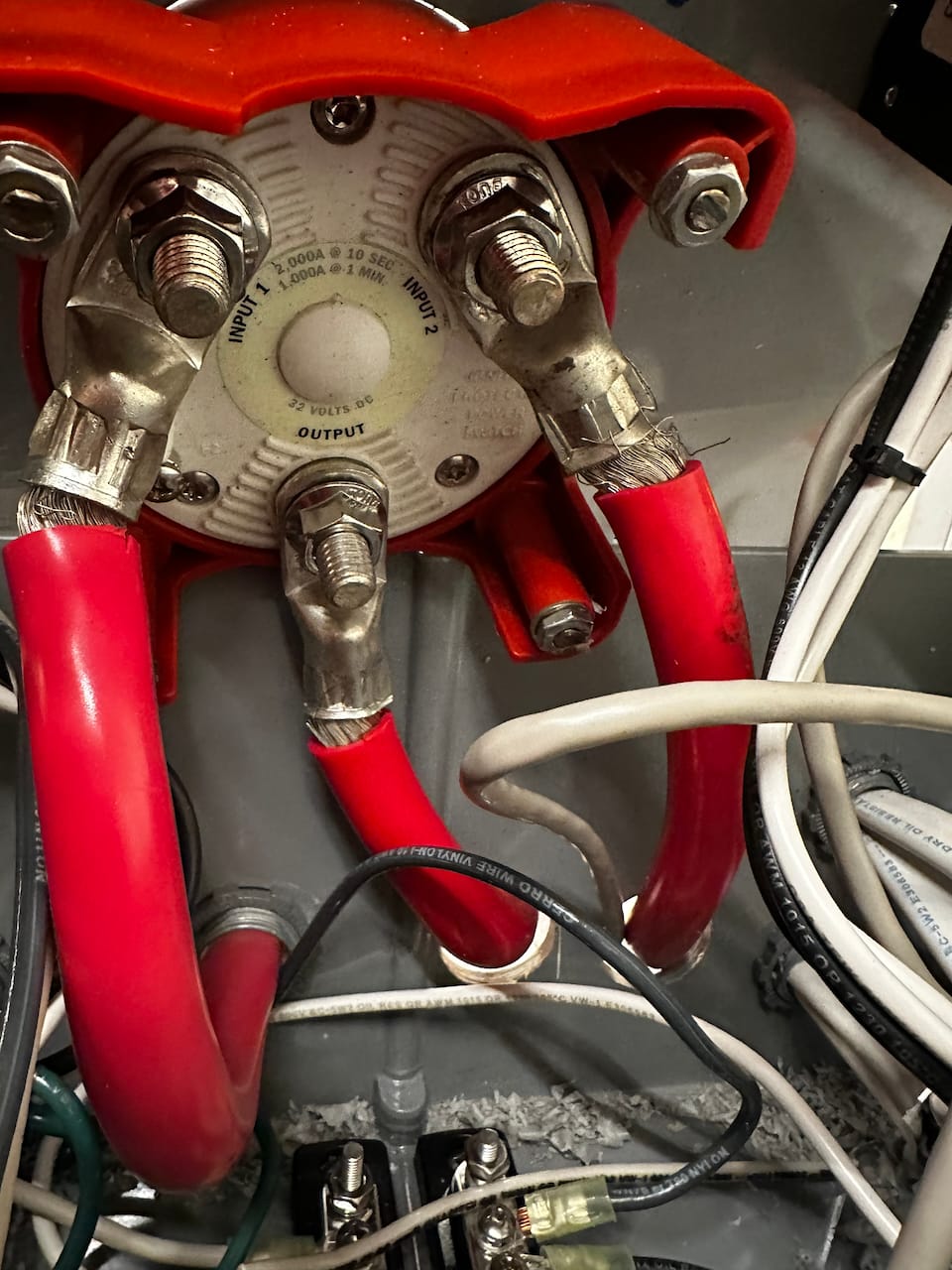
This was the custom box built to switch between inverters.
This inverter switch box also had no lockouts, so you could turn both inverters on at the same time (look at the text on the red placard) - at least they let you know this would "damage one or both inverters". Generally just a bad design.
Within a few weeks, I replaced all of this with a single Victron MultiPlus 12 volt DC, 3000W inverter along with a Victron Cerbo, display screen, and a couple of 50 amp chargers to supplement charging while on generator.
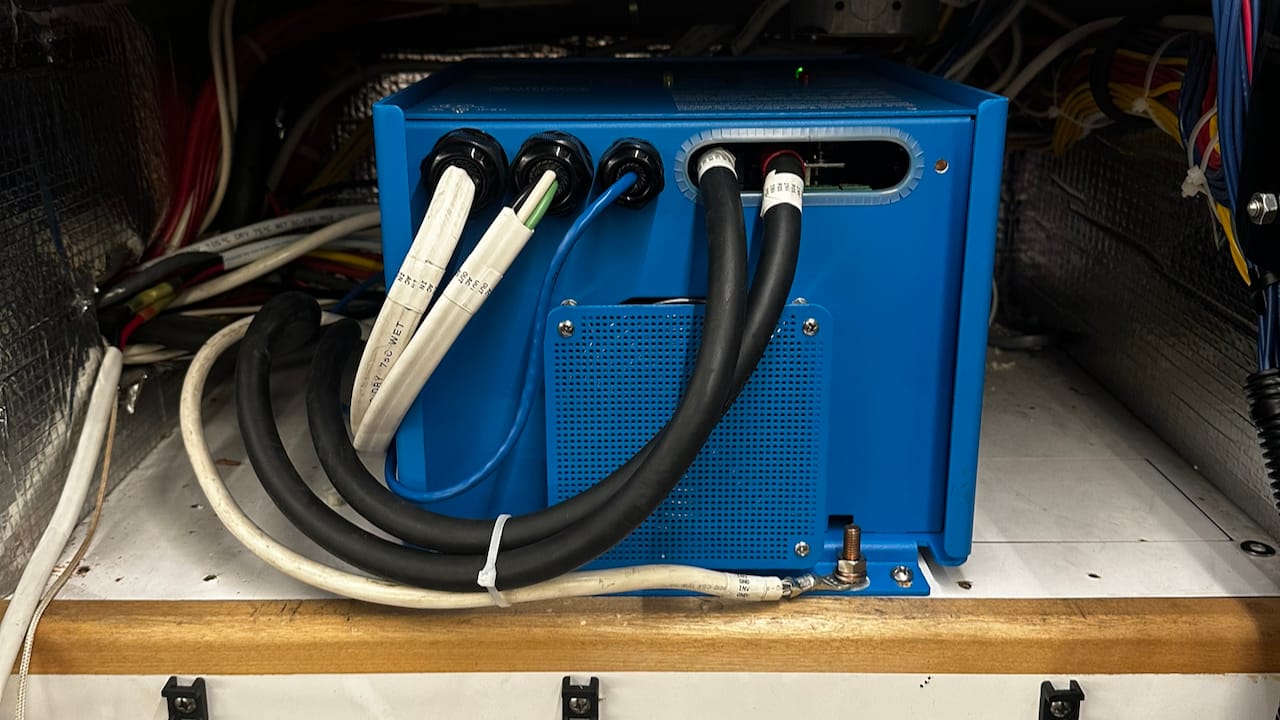
The initial MultiPlus install re-used the existing cabling for the old inverters, which was older welding cable, and not enough copper to meet the required cable size. You can see that in the picture above - that configuration only existed for a few weeks until I could pull new cable for the DC side of things - 2x 2/0 AWG cables for both positive and negative (4x total) and a properly sized case ground.
The solar situation on Aruna was also not great. She came with 8x 100 watt panels, four of which swung out from the sides of the boat and could be oriented flat for better charging. Half of the panels didn't work, and those that did had very poor performance. I found bare wires in multiple places with home made connectors and electrical tape that had been exposed to the elements. Some of these wires were touching metal parts of the boat (remember, Aruna is steel) so there was current flowing around random places. Fun.
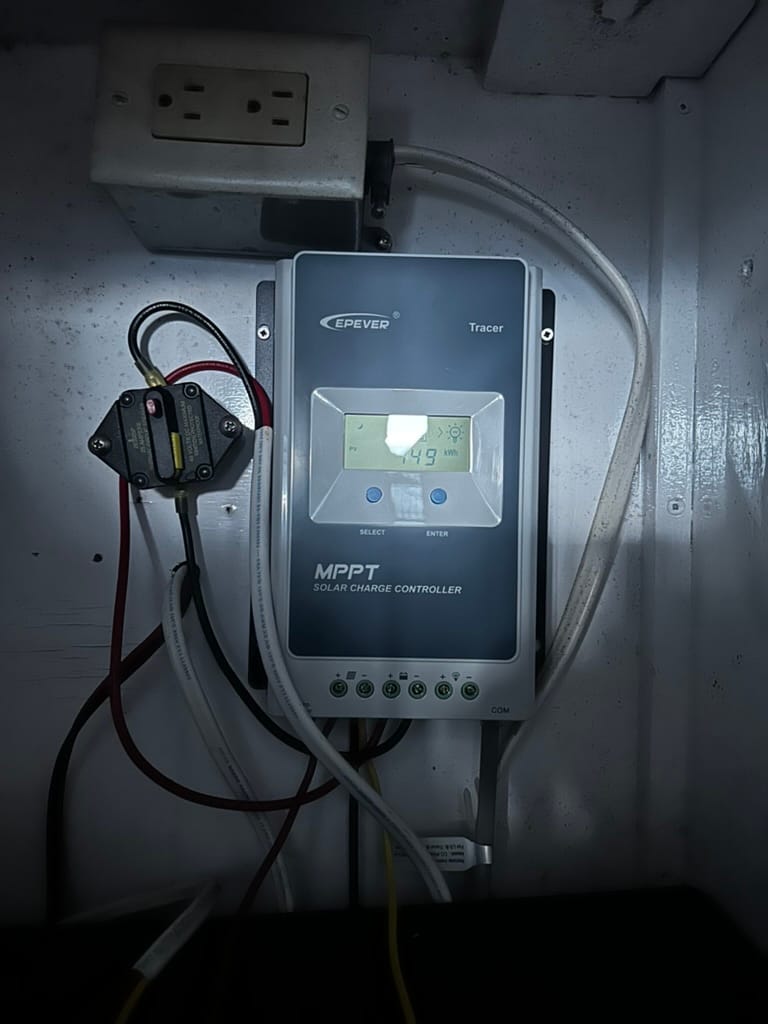
I replaced sections of wiring, tested each panel, and added two Victron MPPT controllers to replace the aging crap that had been used before. Neither one of the controllers had fuses or breakers in key spots, or proper wiring. Just like the water maker, this had been installed by the previous owner.
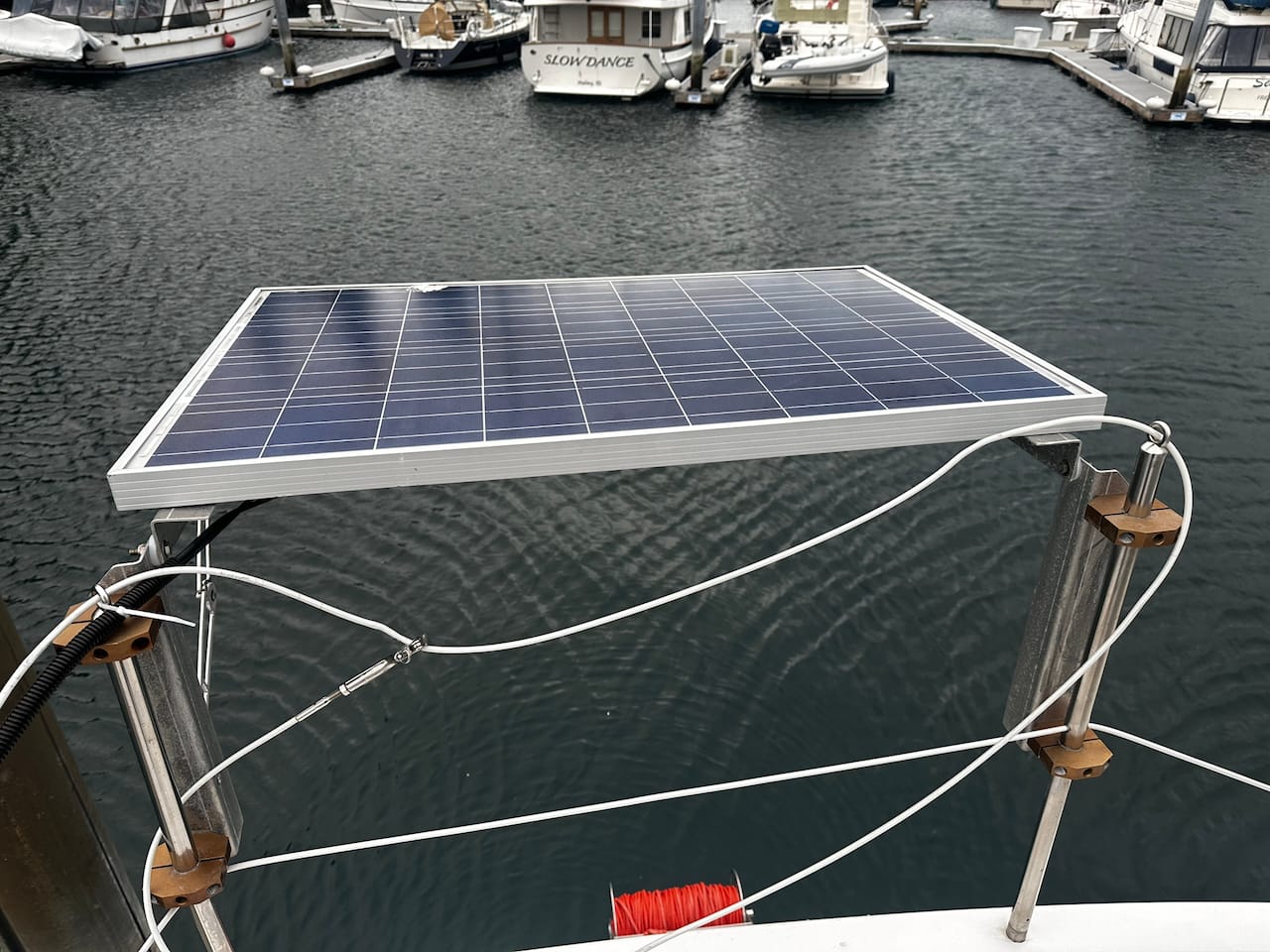
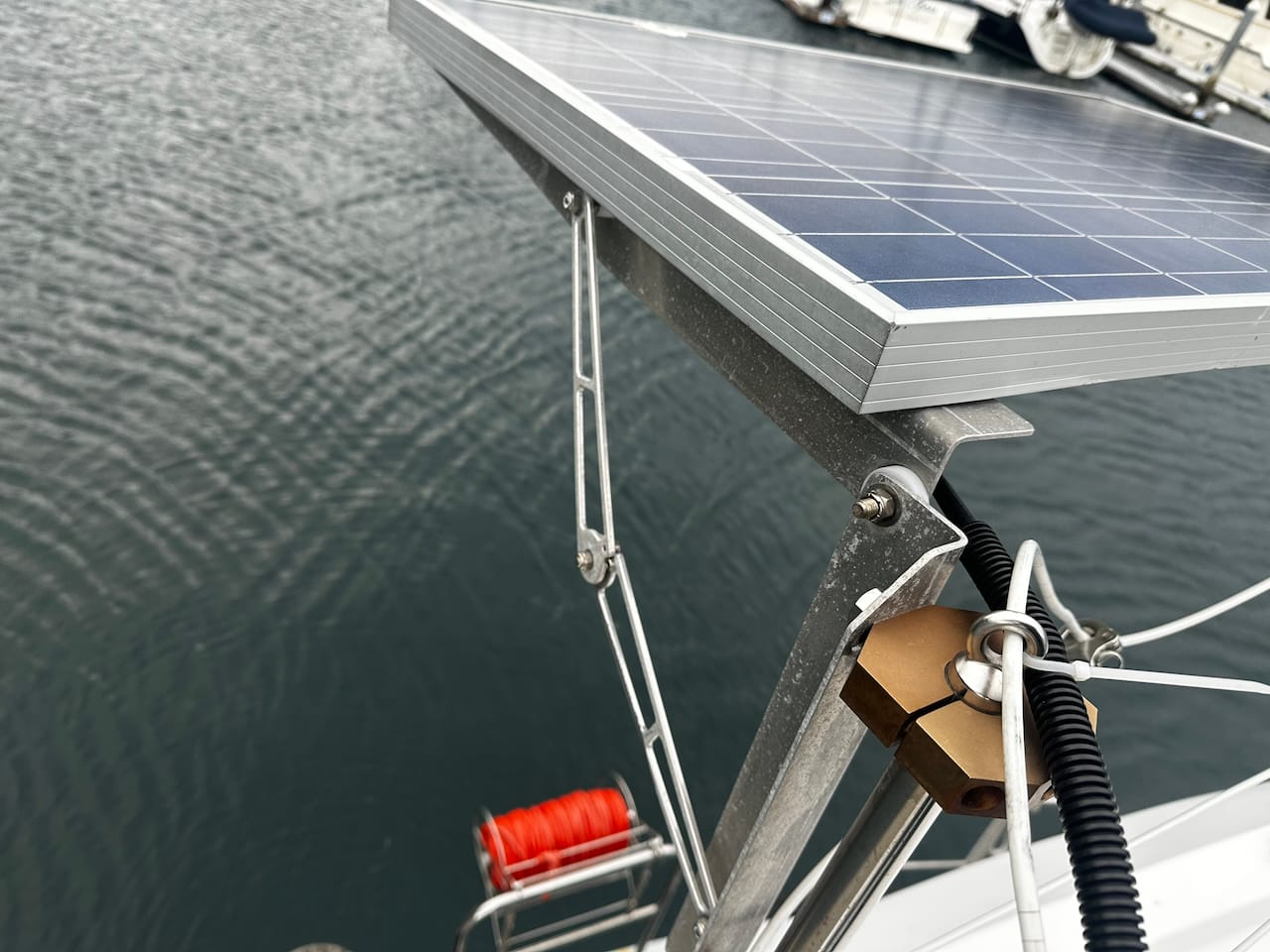
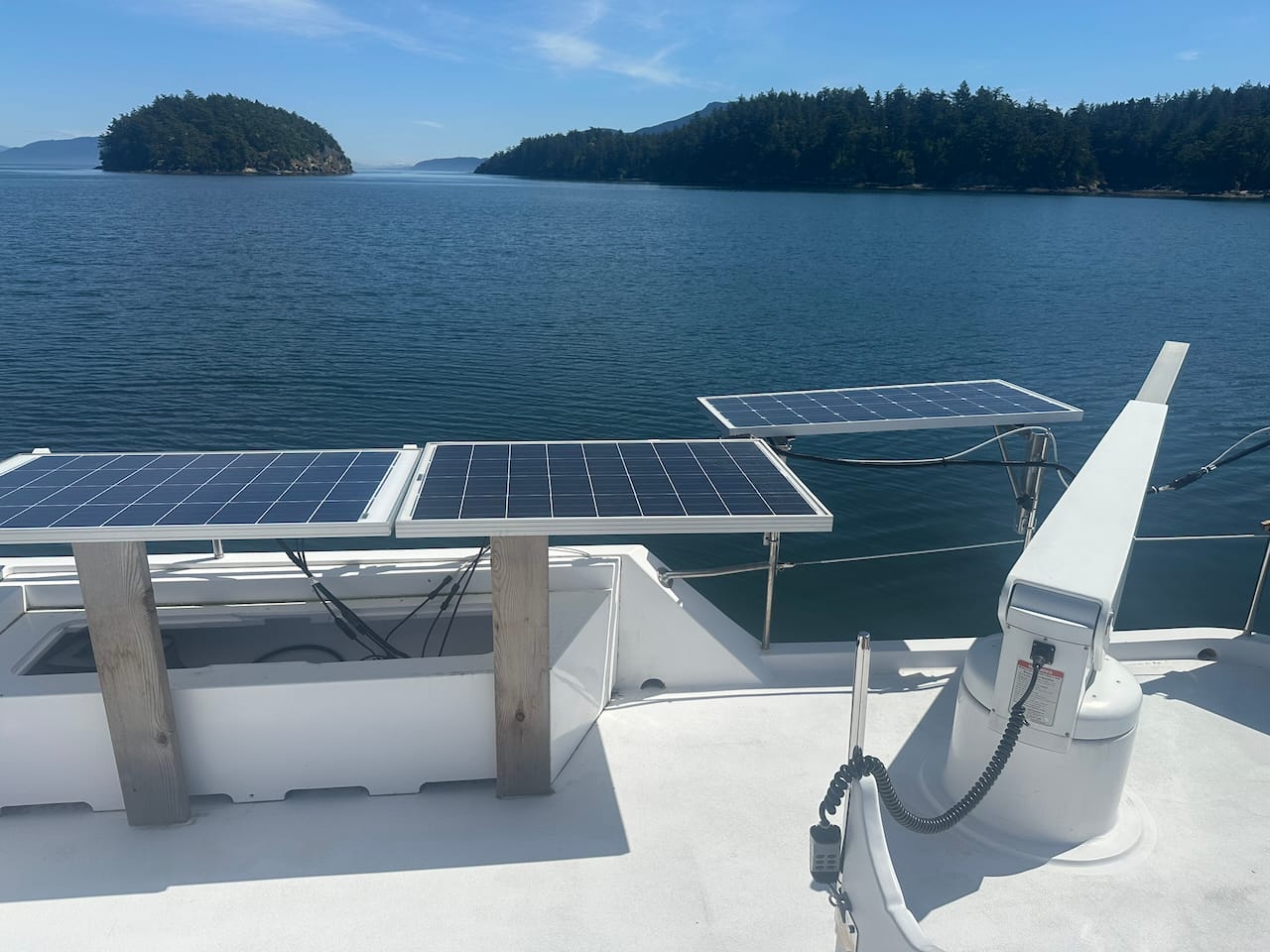
These changes helped a little bit, but the panels were old, mistreated, and never provided more than about 400 watts on their best day. Most days, I would see 100-200 watts, which was pretty poor from 800 watts of panels, especially given the real-estate they took up.
Capacity and Charging
Two areas that Aruna's system suffered in were overall capacity and charging speed. She came with 12x Lifeline 6v GPL-6CT AGM batteries that were from 2020. I tested each one thoroughly in isolation, and they all passed with flying colors. This gave me 1800 amp hours of total capacity, with about 900 amp hours of usable capacity.
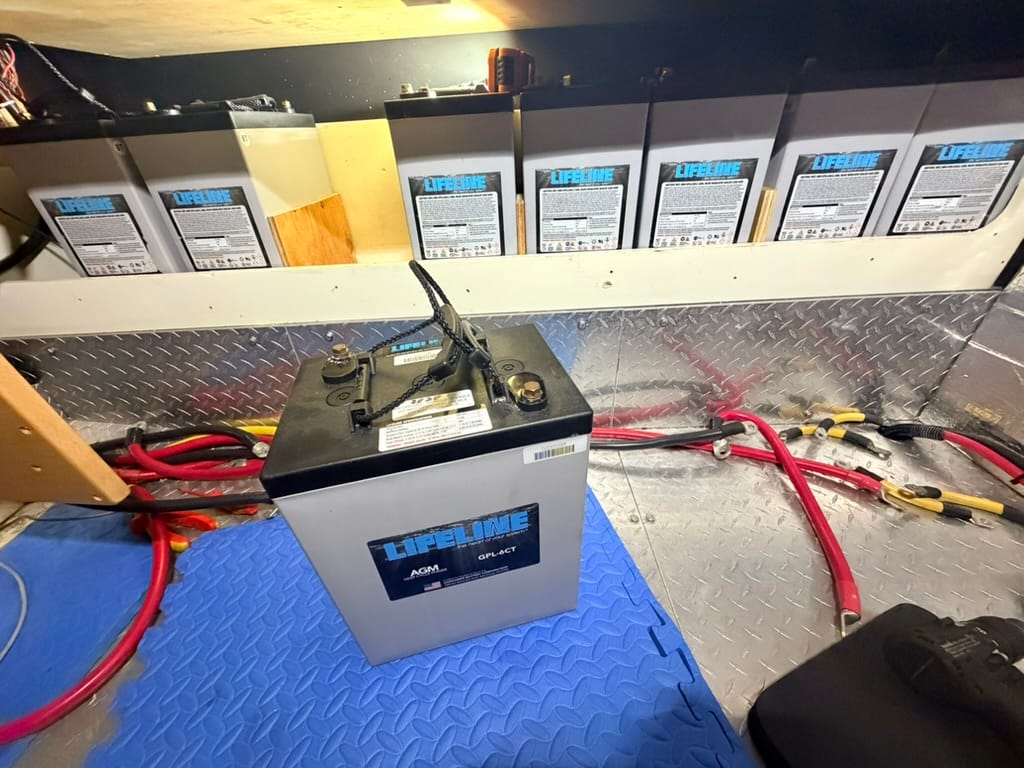
Aruna also had a lot of unoptimized equipment and lighting, just like any other boat that I've not gotten my hands on. There was a crazy stereo system that I found drawing almost 350 watts continuously even if it wasn't being used, old electronics with high usage at anchor, incandescent navigation and anchor lights, plus a lot more. I spent time updating those, but she still used 30+ DC amps continuously while at anchor, not to mention much higher usage when running the microwave, coffee machine, and other appliances. An 900 amp hour battery bank is only going to last a little over a day without charging. maybe less.
The anemic solar panels really didn't help much, so the generator had to cover charging, often from 55-60% state of charge every day, which meant for long charge cycles spanning 3 to 4 hours. The Victron MultiPlus 3000W can only charge at 120 amps, and that assumes it is not in a hot environment, or doing other functions. The two Victron 50 amp chargers had all sorts of software bugs that prevented them from running continuously through the charge cycle, and Victron basically abandoned fixing any of them, which was irritating.
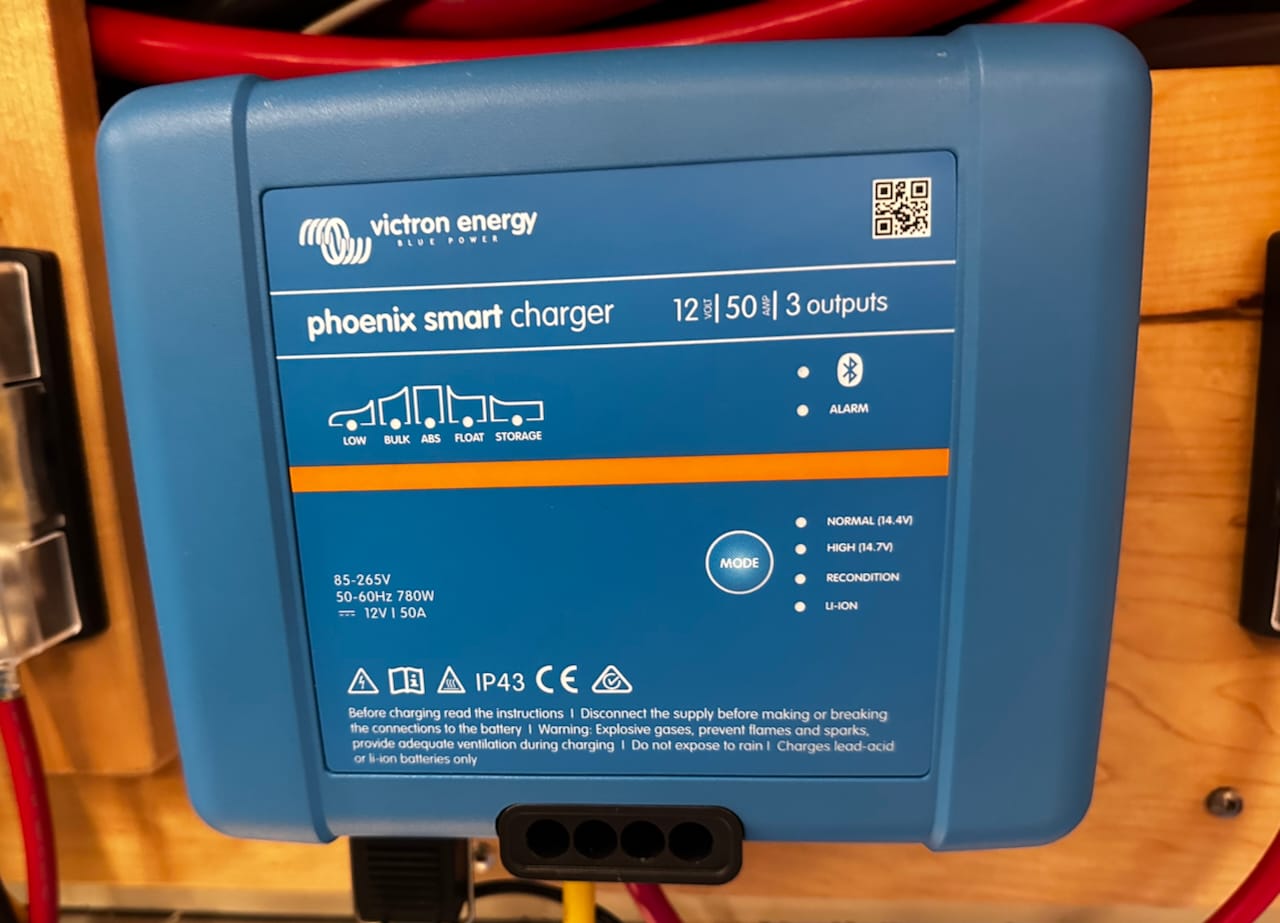
When everything was happy, I could see about 220 amps of DC charging, minus the normal house usage of about 30 amps, which put things at about 190 amps.
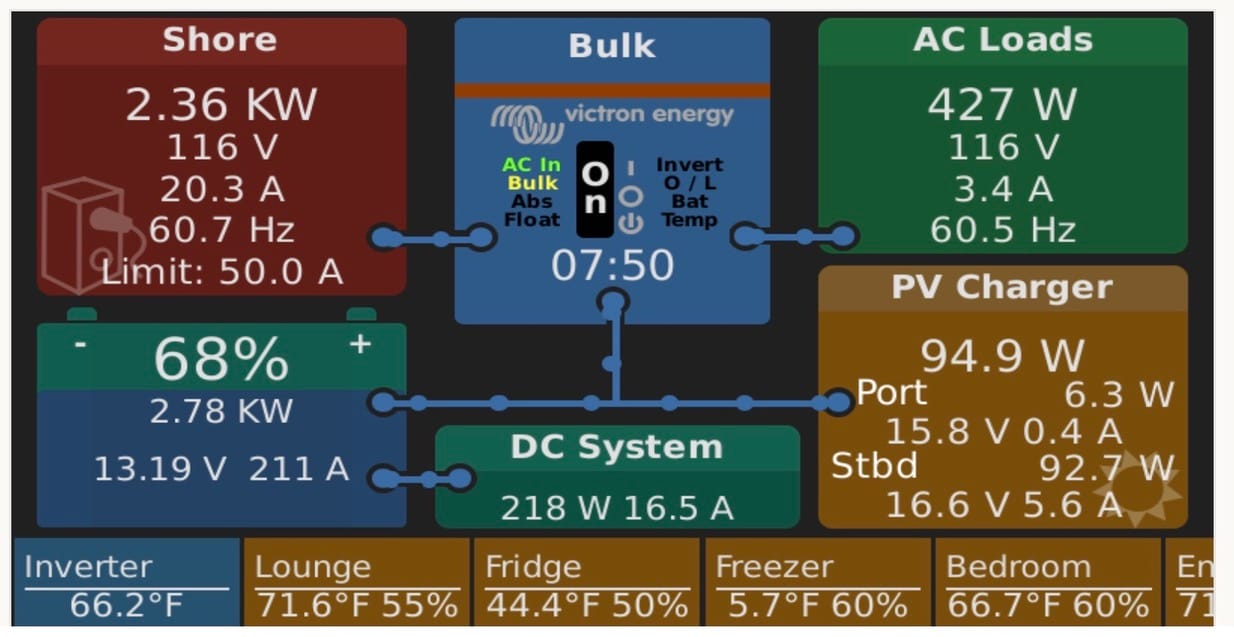
However, AGM batteries cannot be charged at a continuous rate through the charging cycle, and this meant that the generator was on for 3+ hours every day, sometimes longer. During this time, I would also be making water with my 50 gallon/day water maker, heating hot water in the 1500W hot water tank, running the dishwasher, washer/dryer, etc. but even then, the generator phases were unbalanced, and the runtime for charging the batteries always exceeded what I could keep on the generator continuously in other loads.
The other challenge is that technically, it is best if you charge the batteries up to a particular level in one sitting, not in fits and starts depending on you needing to leave the boat, or other interruptions. This always sucks with AGM and flooded batteries.
Then you add into the fact that you're putting a lot more hours on your generator, which drives up maintenance costs. And because it's not balanced well, and not run at a higher load for at least an hour every day, you're adding even more wear and tear to things that will have to be replaced or dealt with because of the run profile.
There was also really nice 9-series Balmar 210 amp alternator that was controlled by a Balmar regulator. Unfortunately, it was programmed incorrectly, which I fixed early on, but it was still hobbled by the fact that the AGM batteries would sit in absorption at very low charging rates for at least an hour, if not longer. This wasn't the end of the world for the alternator, as I would be underway potentially, and the extra hour was just less work for it at that time.
None of this is a unique situation - I've helped hundreds of people with this exact set of problems, so I knew what needed to come next.
Have electrical gremlins? Need a LiFePO4 design?
Book a free 30-minute call with me to get expert advice tailored to your boat!
Generator Phase Imbalance
Since my generator has two legs or phases (keeping it simple for the audience folks, don't go crazy in the comments) and phase 1 is generally heavily used, being able to balance things more so that both phases are near equal, or at least phase 2 is being used more during charging would be highly desirable.
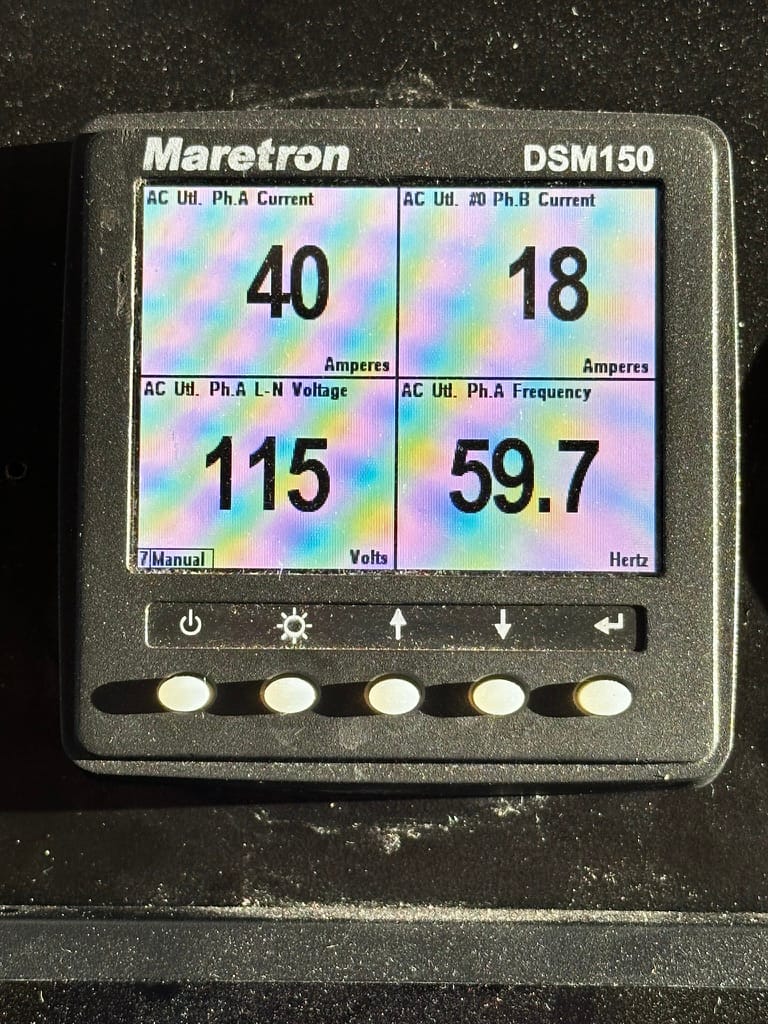
Phase 1 has the inverter/charger on it, washer/dryer, microwave, and by nature of the inverter, all of the AC outlets throughout the boat. That includes things like the dishwasher, TV, fridge, etc.
Phase 2 has two 50 amp DC chargers (1200w) and that's about it.
The two 16,000 BTU air conditioners and the watermaker use both phase 1 and phase 2, so while charging, they don't really help the balancing situation.
Balance and Fuel Capacity
One thing that had plagued me for a while on Aruna was balancing out the boat when fueling. She has four diesel tanks, two 150 gallon forward tanks on port and starboard, and two 400 gallon aft tanks, also on port and starboard.
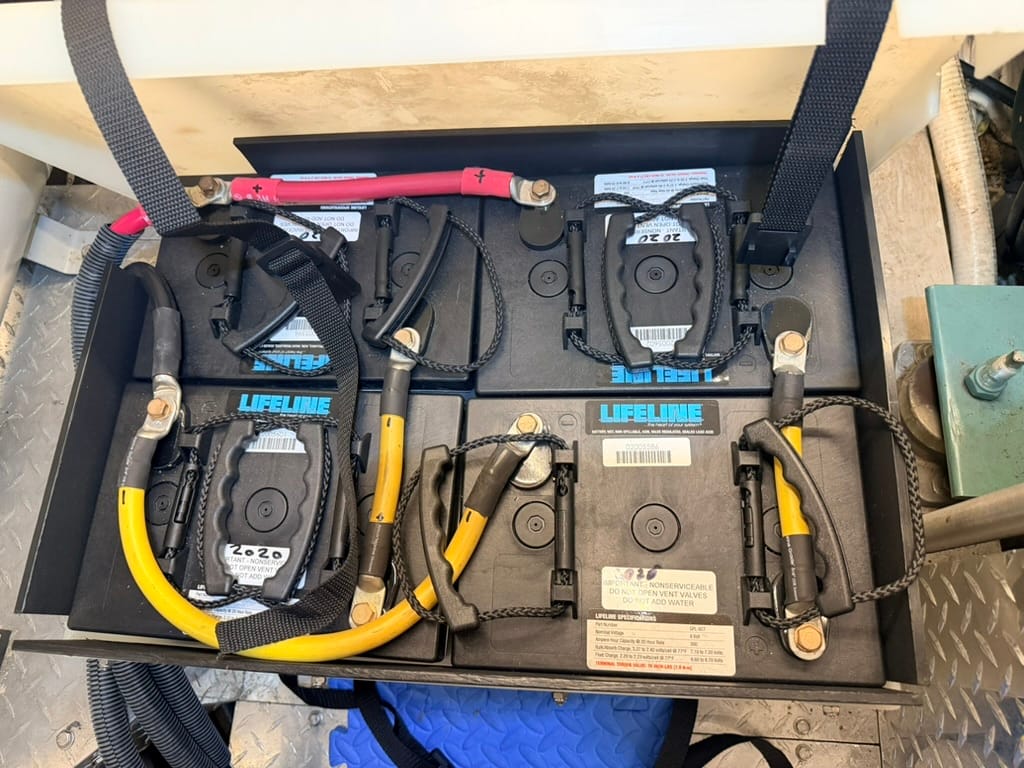
8x of the AGM batteries were on the port side under the workbench, right up against the port forward diesel tank. The other four batteries were across the engine room in their own box. This also was a side quest I wanted to fix - having the battery bank split across the room, and unevenly at that, was not a great design. The initial 8 batteries had great cabling, all short and equal lengths. The other 4 batteries had an undersized cable with no fuse protection running under the engine room floor and over to the other side of the room.
When fueling, I had a difficult time ever filling up the port side tanks because the boat would list up to 2 degrees or more if I filled them completely. Now, 2 degrees doesn't sound like much, but to me it was not great. I get seasick very easily, and stumbling around on a tilted floor, having doors hit you in the head, and generally being unstable is not a great way to prevent that. Plus, in decent weather with wind and waves on the beam, a 2-3 degree list gets a lot bigger even with stabilizers.
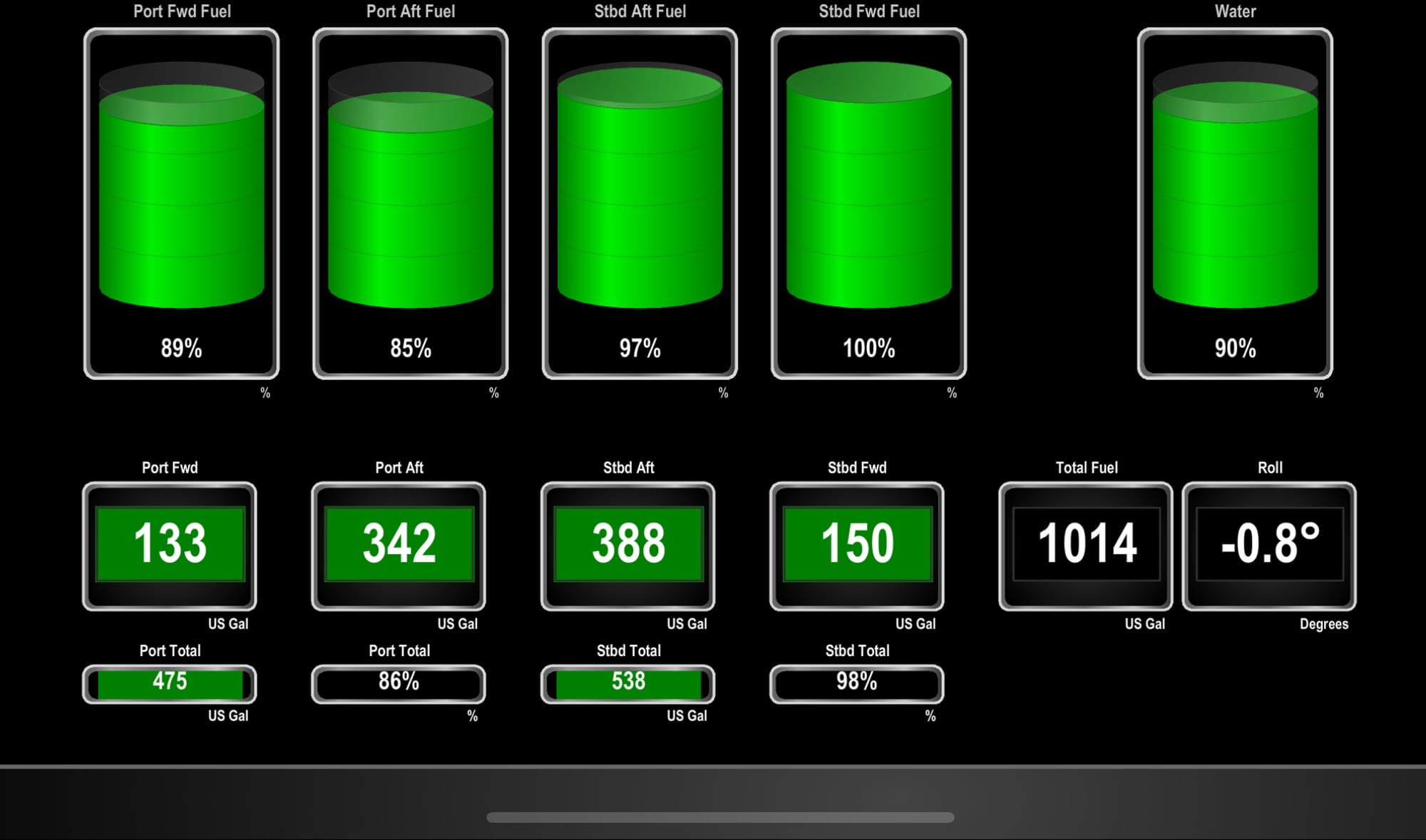
As a result, I did not fill up the port side tanks completely, leaving anywhere from 50 to 100 gallons of capacity unused. I wanted to remove as much weight as possible from the port side of the boat so I could take advantage of that tankage for range.
New System Goals
So lets talk about the goals I have for this new system:
Reduce Generator Runtime
The primary way of achieving this will be moving to LiFePO4 batteries which will allow for them to be charged at higher rates without a long absorption phase with low current. This will reduce, at least, that final hour+ of generator run-time that is present with the AGM batteries.
This also requires a different set of charging devices, most likely more of them, all coordinated and managed by a central system to ensure proper charging, and balance things when multiple systems are active.
I also want a significant increase in overall charging capacity, new wiring, fuses, and surrounding items to help ensure I can run the generator in the most optimized manner and have proper equipment to do so.
Balance Generator Phase Usage
If we're going to get the generator working hard for the majority of the charge cycle, it would also be good to balance out the phases a bit to help distribute that and make it happier. The easiest way to do this is a combination of moving things between phases and adding charging capacity on the less used phase.
I may end up just doing the latter - adding a significant amount of charging capacity to the second phase of the generator. My reasoning behind this is to maintain the ability to use a single 30 amp, 120v AC shore power connection and still have the ability to have hot water, run the washer/dryer, etc. Moving some of those appliances to phase 2 might limit that, but we will see.
Increase Usable Battery Capacity
Anyone replacing their battery system is usually considering this, and I am no different. I'd like to see at least an additional 50% of usable capacity so that I could go a day and a half, or stretch to two days, without any active charging.
Correct Balance & Fuel Issue
I'd like to be able to use all tankage on the port side and not have any balance issues. Even 50 to 100 gallons of unused fuel capacity is a meaningful range hit, especially when you're planning longer passages up the BC coast where fuel stops aren't always convenient or cheap. Getting that capacity back was a real operational goal, not just an aesthetic one.
Proper Solar Panel System
Given the sheer amount of space already allocated for the solar panels, I'd like to have a system that can cover more than my daily loads for at least 4-6 months out of the year. Ideally, in the summer, I'd like for it to contribute meaningfully to charging during the day.
I'd also like for the MPPT controllers to not be 50' away from the battery bank, to have proper fusing and wiring, and for the wires at the solar panels to not be something out of a bad horror movie. I'd also like to beef up and repair the swinging mounts.
Correctly Integrate Alternator
The alternator should be able to charge the batteries while underway and coordinate with the rest of the system. It should also be setup to charge similarly to the rest of the system so that it can take advantage of the charge profile that LiFePO4 offers.
What's Next?
Now that I've outlined the mess that was v1.0, and how v1.5 improved on it, I think I have a good handle on what I'd like to see in version 2.0. In the next article, we'll go through what voltage I selected, the equipment I chose and why, and a bit behind the design.